Geigi the Stubborn Boy: A Torres Strait Islander Children's Book for Years 3–6
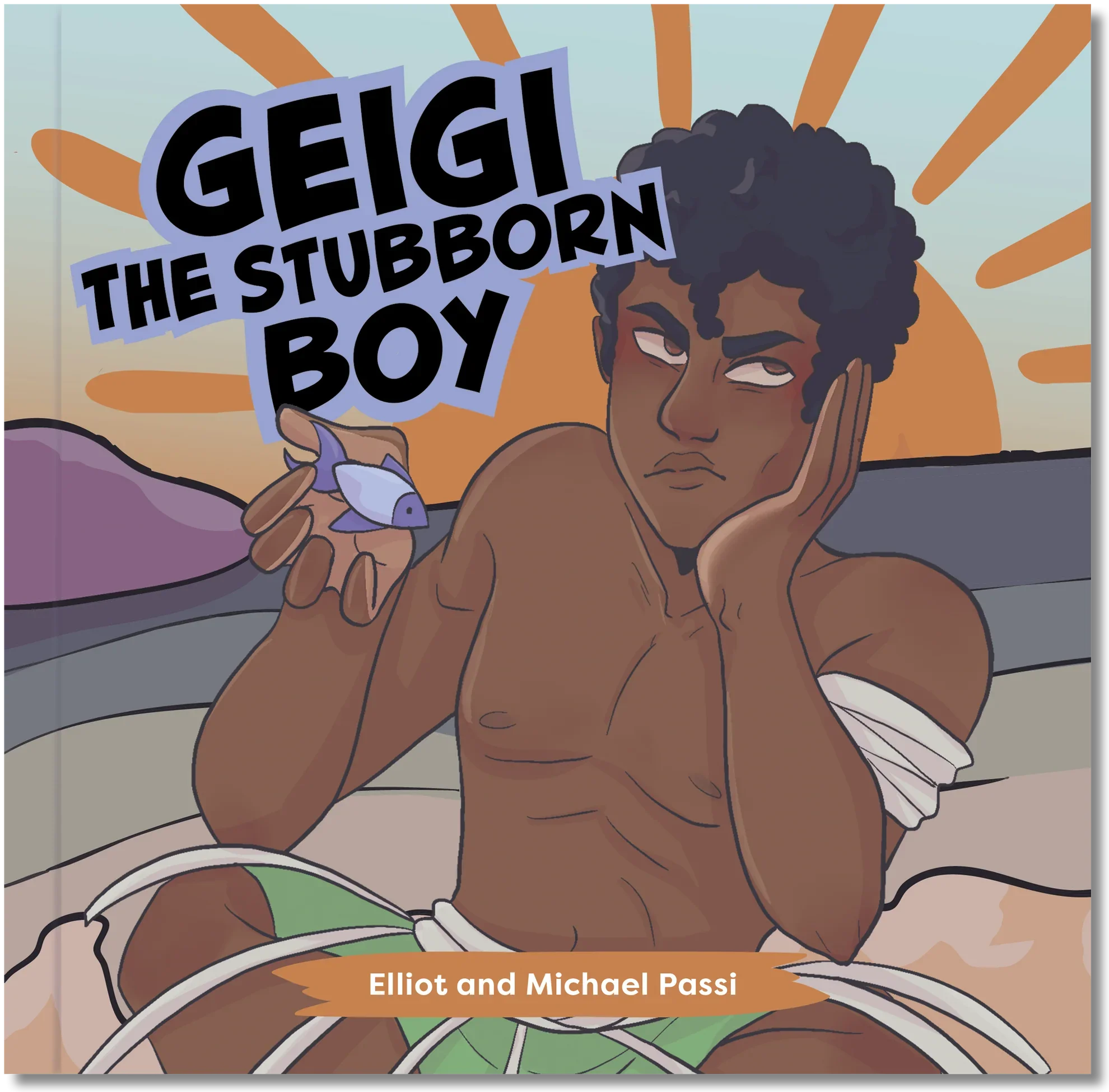
Geigi the Stubborn Boy
Looking for a meaningful Torres Strait Islander children's book for Years 3–6?
Geigi the Stubborn Boy is a lively picture book created by Torres Strait Islander father and son Michael Passi and Elliot Passi. The story is a retelling of a traditional Meriam story from Mer, inviting young readers to explore storytelling, family, language, culture and life in the Torres Strait.
With its engaging story and vibrant illustrations, Geigi the Stubborn Boy provides an accessible starting point for classroom conversations about Torres Strait Islander perspectives, Meriam language, culture and identity.
What is Geigi the Stubborn Boy about?
Geigi is a cheeky and stubborn young boy who loves swimming, dancing, singing and fishing.
When his mother tells him not to go to the other side of the island, Geigi's curiosity gets the better of him. His adventure leads him into a traditional story about family, island life and the consequences of not listening to good advice.
At the heart of the story is a familiar childhood experience: wanting to explore the world for yourself, even when someone older has warned you to stay away.
For children, this creates opportunities to discuss choices, consequences, listening, family relationships and curiosity while also encountering a story grounded in Torres Strait Islander culture.
A traditional Meriam story from Mer
One of the most important aspects of Geigi the Stubborn Boy is its connection to Mer, an island in the eastern Torres Strait.
The story is a retelling of a traditional Meriam story, connecting young readers with the storytelling traditions and cultural knowledge of Meriam people.
This makes the book particularly valuable for educators looking for children's literature that presents a Torres Strait Islander perspective rather than treating First Nations Australia as a single culture.
Australia is home to many distinct Aboriginal and Torres Strait Islander peoples, languages and Countries.
Learning about a specific community, such as the Meriam people of Mer, can help children understand this diversity.
Who are the Meriam people?
The Meriam people are the Traditional Owners of the eastern Torres Strait islands, including Mer (Murray Island).
Meriam language is an important part of Meriam identity and culture.
Geigi the Stubborn Boy introduces children to Meriam language through the story, providing an opportunity for readers to encounter language in context rather than simply learning isolated words.
For teachers, this can lead to conversations about the relationship between language, Country, culture and identity.
Exploring Meriam language
Language is an important part of Geigi the Stubborn Boy.
The book includes English with Meriam words, allowing children to encounter language as part of the story.
Rather than treating Aboriginal and Torres Strait Islander languages as something belonging only to the past, books such as this can help children understand that First Nations languages are living languages connected to contemporary communities.
In the classroom, teachers might encourage students to think about:
Why do communities preserve their languages?
How does language connect people to place?
What can stories teach us about culture?
Why is it important to pronounce and use another language respectfully?
What languages are spoken in our own community?
When exploring Meriam language, educators should use pronunciation and language information provided by the book, its creators and appropriate community or publisher resources.
Why Geigi the Stubborn Boy works well for Years 3–6
The story is accessible to primary-aged children, but it also provides opportunities for deeper discussion.
For younger students, the book can be explored through:
Character and story
Family
Choices and consequences
Language
Illustrations
Torres Strait geography
For older students, the story can become a starting point for exploring:
Traditional storytelling
Cultural knowledge
Meriam language
Torres Strait Islander identity
Place and Country
Oral histories
The relationship between stories and community
How contemporary books can share traditional stories with new audiences
The National Library of Australia has specifically used Geigi the Stubborn Boy in an educational program for Years 3–6, connecting the book with English, Creative Arts and the Australian Curriculum's Aboriginal and Torres Strait Islander Histories and Cultures cross-curriculum priority.
Classroom ideas for Geigi the Stubborn Boy
1. Explore the setting
Before reading, locate Mer (Murray Island) on a map.
Ask students:
Where is Mer?
What do you notice about its location?
How might living on an island influence people's relationship with the sea?
After reading the story, return to the map and discuss how the setting contributes to the story.
2. Discuss Geigi's choices
Geigi is described as stubborn and curious.
Ask students:
Why do you think Geigi ignores the warning?
Was his curiosity understandable?
What consequences did his decision have?
Have you ever made a decision because you were curious about something?
This activity allows students to explore character development without separating the story from its cultural setting.
3. Explore traditional storytelling
Discuss what makes a story memorable.
Students might identify:
Characters
Setting
Repetition
Conflict
Warnings
Consequences
Humour
Family relationships
Then discuss how stories can carry knowledge and values between generations.
4. Explore language
Choose a small number of Meriam words from the book.
Students can create a class display showing:
Meriam word → meaning → where it appears in the story
Use the language information and pronunciation provided by the book or official resources rather than asking students to guess pronunciation.
The activity can lead to a broader discussion about Australia's many First Nations languages.
5. Look closely at the illustrations
Elliot Passi's illustrations provide another way into the story.
Ask students to choose one illustration and describe:
What can you see?
Where is the scene taking place?
What are the characters doing?
What details tell us about island life?
How does the artwork help tell the story?
Students can then discuss how pictures can communicate information that isn't explicitly stated in the written text.
6. Storytelling and family knowledge
Ask students:
Are there stories in your family that have been passed down through generations?
The purpose isn't to compare students' family stories with Meriam cultural stories, but to encourage discussion about the different ways families and communities preserve memories, knowledge and experiences.
Teachers should allow students to choose whether they wish to share personal stories.
Exploring Torres Strait Islander perspectives
One of the most valuable aspects of Geigi the Stubborn Boy is its specificity.
This isn't a generic story about "Aboriginal culture."
It is connected to Mer, Meriam people, Torres Strait Islander culture and a traditional Meriam story.
That distinction matters.
Australia is home to many different Aboriginal and Torres Strait Islander peoples, each with their own Countries, languages, histories, cultural practices and stories.
When teaching First Nations perspectives, using books connected to specific communities can help students understand this diversity.
About Michael and Elliot Passi
Geigi the Stubborn Boy was created by Michael Passi and his son Elliot Passi.
Their collaboration brings together intergenerational storytelling, writing, art and cultural knowledge.
Michael Passi is a Torres Strait Islander author and storyteller, while Elliot Passi is a Torres Strait Islander artist and storyteller.
The father-and-son collaboration is an important part of the book's story in itself, demonstrating how knowledge and creativity can be shared across generations.
Why First Nations books matter in the classroom
Children's books are one of the most accessible ways for students to encounter stories and perspectives beyond their own experiences.
First Nations children's books can help students:
learn about Australia's continuing First Nations cultures
encounter Aboriginal and Torres Strait Islander languages
explore connections between people and place
understand that Australia has many distinct cultures
develop respectful curiosity
see First Nations people represented in contemporary literature
recognise the importance of listening to First Nations voices
The strongest classroom collections include books from a range of First Nations communities rather than treating Aboriginal and Torres Strait Islander cultures as one single subject.
Using Geigi the Stubborn Boy for NAIDOC Week
Geigi the Stubborn Boy can also provide a meaningful starting point for NAIDOC Week learning.
Rather than using the book only for a single themed activity, teachers can use it as part of broader learning about:
Torres Strait Islander cultures
Meriam language
Mer
storytelling
family and community
First Nations authors and artists
Australian geography
Aboriginal and Torres Strait Islander Histories and Cultures
The National Library of Australia featured Geigi the Stubborn Boy in an author session connected with NAIDOC Week 2026, highlighting its educational potential for primary-aged students.
A book for school libraries
Geigi the Stubborn Boy is a valuable addition to a primary school library because it gives students access to a Torres Strait Islander story created by Torres Strait Islander people.
It can sit alongside other First Nations children's books representing different Countries, languages and communities across Australia.
For school librarians, consider placing the book alongside:
Torres Strait Islander children's books
First Nations picture books
Australian children's literature
Indigenous language resources
books about storytelling and culture