Tiwi War Kwampini: Discovering a Tiwi Story of Courage, Country and World War II
When we teach children about Australian history, it is important that they have opportunities to hear the stories of Aboriginal and Torres Strait Islander peoples and understand that First Nations history is an important part of Australia's story.
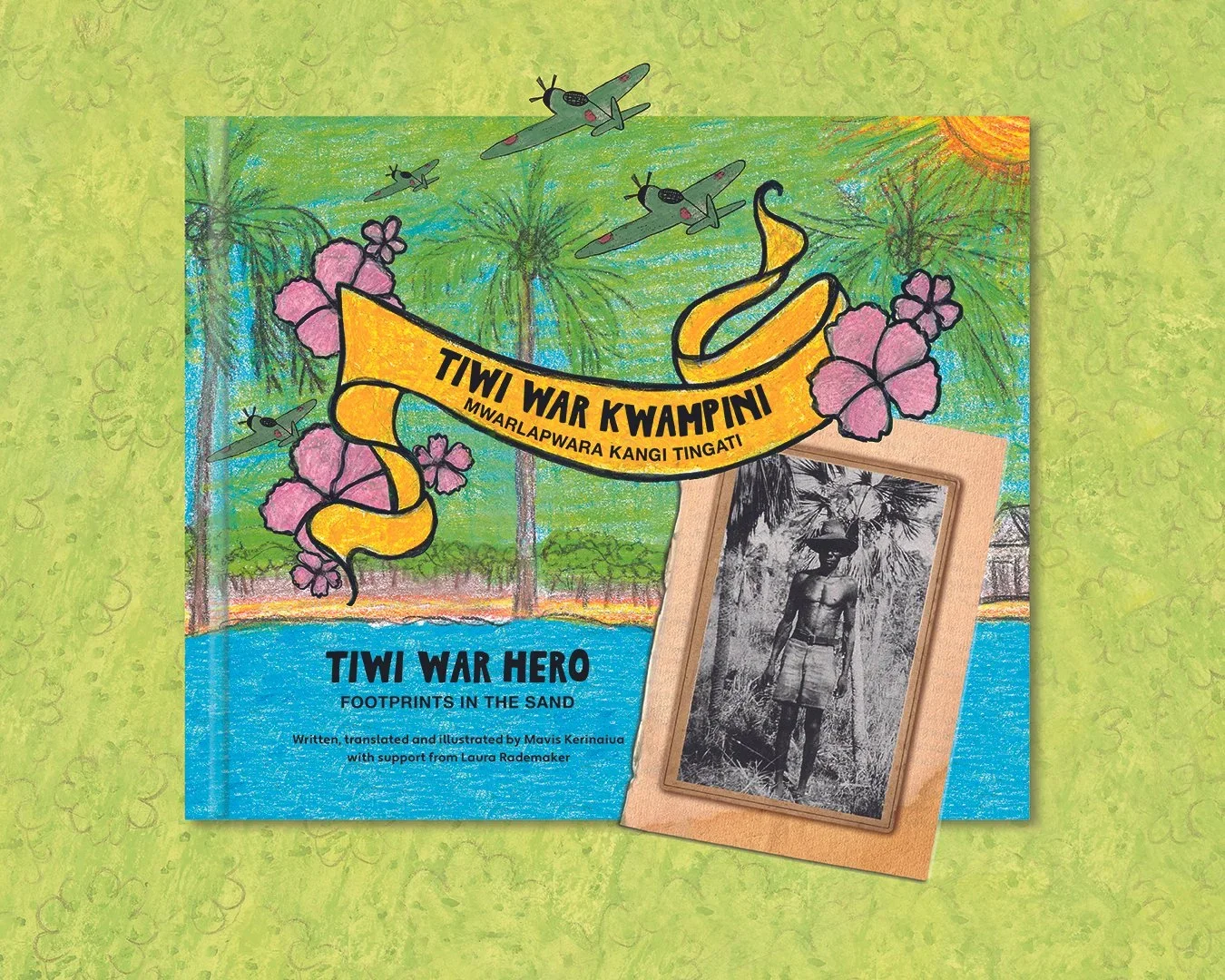
Tiwi War Kwampini: Mwarlapwara Kangi Tingati (Tiwi War Hero: Footprints in the Sand) offers young readers an opportunity to learn about an important chapter of Australian history through a Tiwi perspective.
Written, translated and illustrated by Tiwi woman Mavis Kerinaiua, with support from Laura Rademaker, the book shares the story of Mavis's grandfather, Louie PurraputimalI Munkara, and the contribution Tiwi people made during World War II.
A Tiwi Story of World War II
When we think about Australia's involvement in World War II, many of the stories children encounter focus on soldiers, battles and events overseas.
But the war also reached northern Australia.
Tiwi Country, in the Northern Territory, was affected by the events of the war, including the Japanese attacks on northern Australia. Tiwi people played an important role in watching over their Country and communities and responding to what was happening around them.
Tiwi War Kwampini helps bring this history to life through the story of Louie PurraputimalI Munkara.
His story gives children an opportunity to learn about Australia's wartime history from a First Nations perspective and to recognise the contributions of Tiwi people during this period.
Learning Through a Family Story
One of the beautiful aspects of Tiwi War Kwampini is that the story is connected to family.
Mavis Kerinaiua shares the story of her grandfather, creating a personal connection between past and present. Rather than presenting history as simply a collection of dates and events, the book allows children to encounter history through the experiences of a family and community.
This can help children understand that history is made up of people's lives, memories, families, places and stories.
For educators, this creates opportunities to talk about how knowledge is passed between generations and why listening to Elders and community is important when learning about First Nations history and culture.
A Bilingual Tiwi and English Children's Book
Tiwi War Kwampini is presented in both Tiwi and English.
For children, seeing and hearing another Australian language alongside English can be a valuable introduction to the diversity of Aboriginal languages and cultures across Australia.
It can also encourage conversations about language preservation and why language is so important to identity, culture and connection to Country.
Australia is home to many different Aboriginal and Torres Strait Islander languages. Tiwi language is an important part of Tiwi cultural identity, and including Tiwi language in children's literature provides an opportunity for young readers to encounter it respectfully.
Connection to Country
Country is an important theme throughout First Nations storytelling.
For Tiwi people, Country is not simply a geographical location. It is deeply connected to people, culture, identity, knowledge and responsibility.
Tiwi War Kwampini gives children an opportunity to consider the relationship between people and place while learning about the Tiwi Islands and the experiences of Tiwi people during World War II.
This makes the book useful beyond a history lesson. It can also support conversations about Country, community, culture, belonging and caring for the places around us.
Why This Book Is Valuable in the Classroom
For teachers, Tiwi War Kwampini can be used across a range of learning areas.
It provides opportunities to explore:
First Nations perspectives of Australian history
Tiwi culture and language
World War II and the bombing of northern Australia
Family and intergenerational knowledge
Connection to Country
Aboriginal and Torres Strait Islander histories
Truth-telling
Community and responsibility
The importance of preserving and sharing stories
Teachers can also encourage students to think about whose stories are traditionally included when we learn history and whose stories may have been overlooked.
Questions to Explore With Children
After reading the book, children might like to discuss questions such as:
What did you learn about the Tiwi people from this story?
What role did Louie PurraputimalI Munkara play during World War II?
Why is it important for families and communities to pass stories from one generation to another?
What does Country mean to different people?
Why is language important to culture and identity?
What can we learn about Australian history by listening to First Nations perspectives?
How can we show respect for the stories and knowledge shared by Aboriginal and Torres Strait Islander peoples?
These questions can be adapted for different ages and classroom settings.
Discover Tiwi History Through Story
Books can be a powerful way to introduce children to histories and perspectives they may not have encountered before.
Tiwi War Kwampini: Mwarlapwara Kangi Tingati gives young readers the chance to discover a Tiwi story of courage, family, community and Country while learning about the Tiwi contribution to Australia's World War II history.
For families, schools and libraries building a collection of Aboriginal and First Nations children's books, it offers a meaningful way to introduce children to Tiwi culture, language and history.
Explore More First Nations Children's Books
At Riley Callie Resources, we believe children's books can help create opportunities for learning, conversation and connection.
Explore our collection of Aboriginal and First Nations children's books to discover more stories celebrating Australia's First Peoples, cultures, languages, histories and connections to Country.

Photo of Tiwi Island Beach, taken from https://www.tiwiislands.nt.gov.au/