 Image 1 of 2
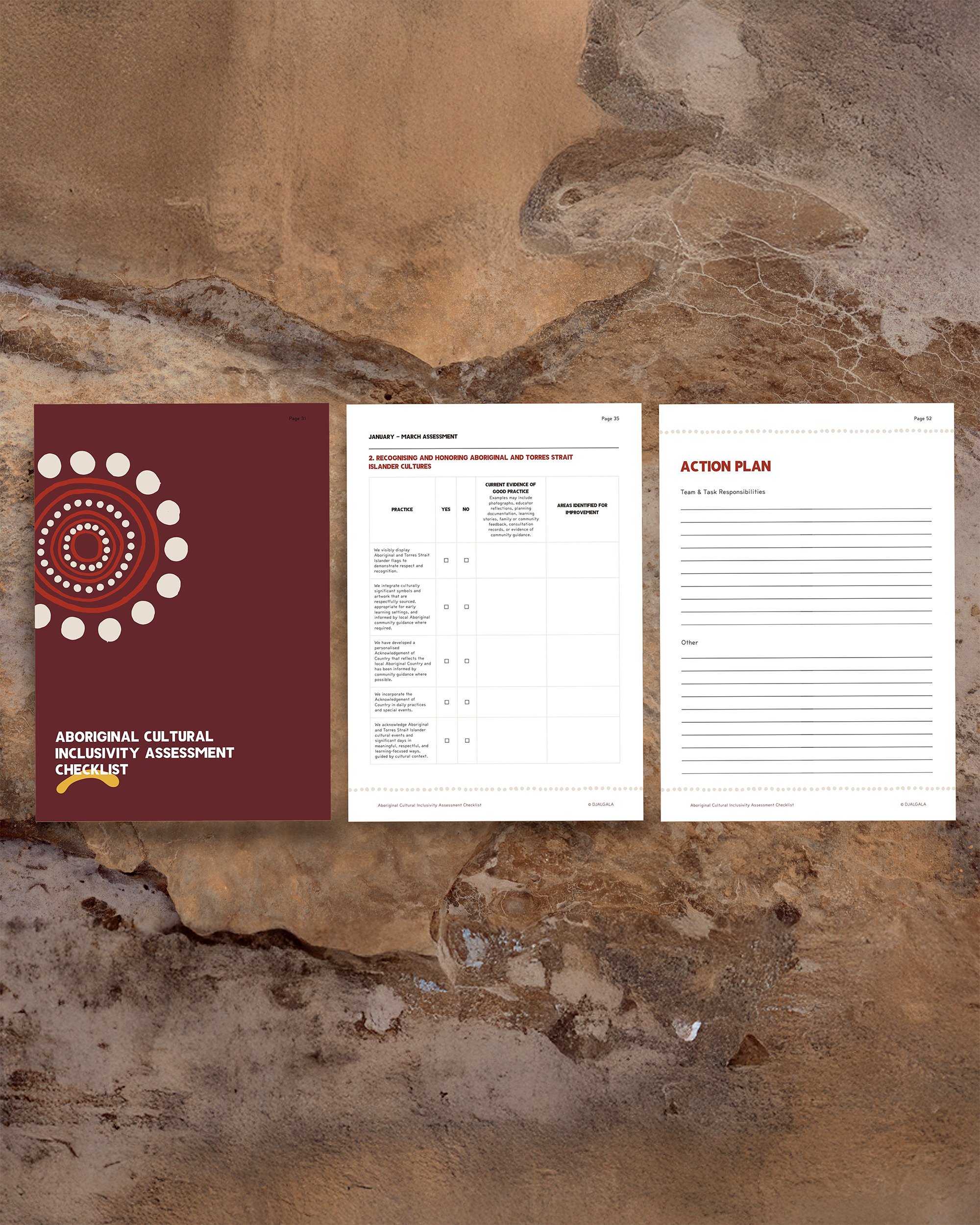 Image 2 of 2
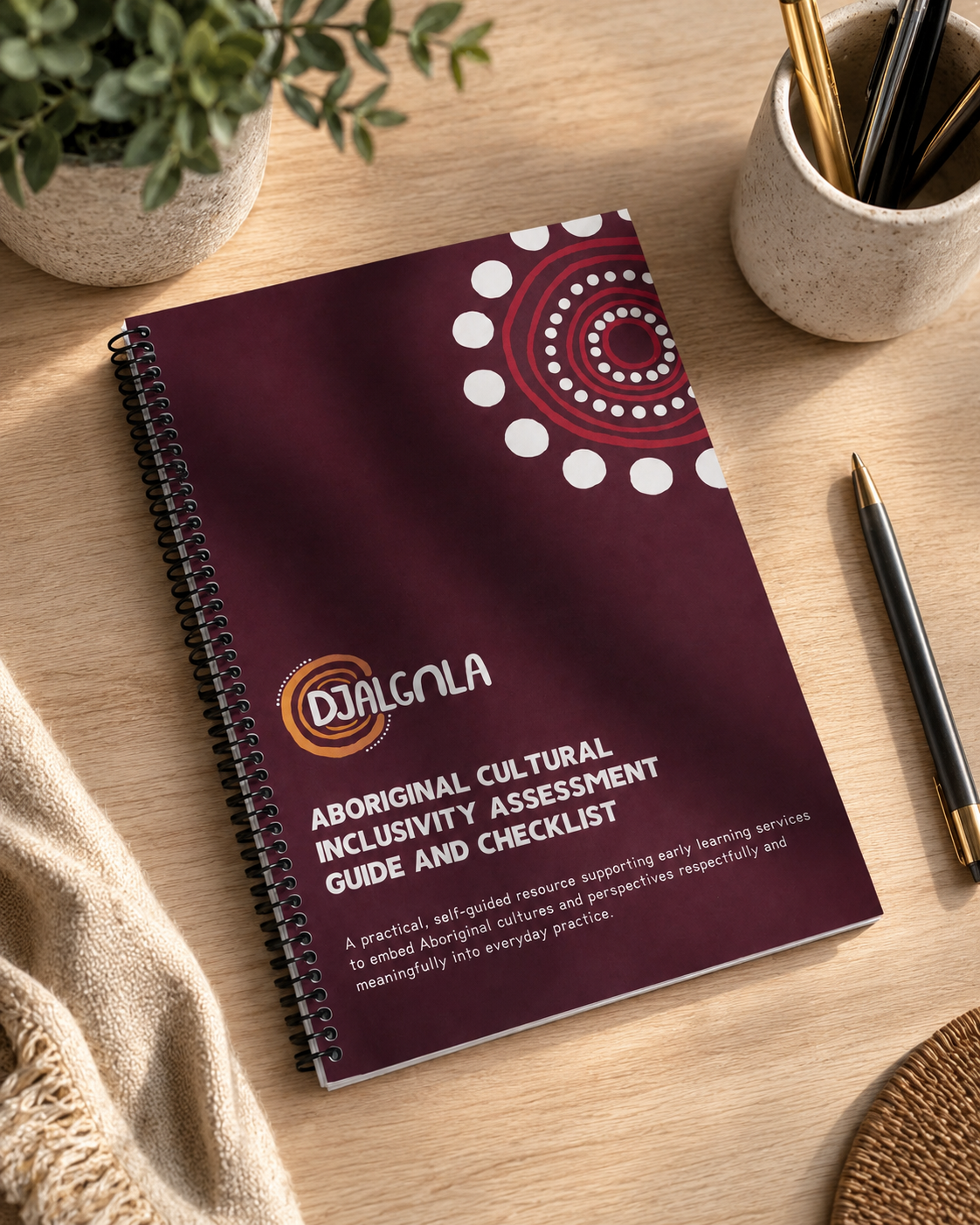
The Aboriginal Cultural Inclusivity Guide & Assessment for Early Learning Services is a practical, 128-page, self-guided, spiral-bound resource designed to support early learning services to respectfully and meaningfully embed Aboriginal cultures and perspectives into everyday practice, in alignment with the Early Years Learning Framework (EYLF).
This comprehensive guide provides clear guidance, practical strategies, and reflective prompts across each focus area of the quarterly checklist assessment. The included checklist and action plan support services to assess current practices, identify opportunities for growth, and strengthen cultural inclusion while also providing valuable documentation and evidence to support Assessment and Rating.
How This Guide & Assessment Supports Your Service
Keeps culture alive
Supports the ongoing recognition, continuation, and respectful sharing of Aboriginal cultures within early learning environments. The guide encourages services to move beyond tokenistic approaches towards meaningful, informed, and embedded cultural practices.
Strengthens connection and inclusion
Supports services to create culturally safe and inclusive environments where Aboriginal children, families, and communities feel seen, respected, valued, and connected to culture, Country, and identity.
Supports your responsibilities
Guides services to intentionally embed Aboriginal cultures and perspectives throughout everyday practice, including policies, environments, curriculum decisions, and relationships with children, families, and community.
Supports Assessment and Rating
Aligns with the National Quality Standard (NQS) and supports services to confidently demonstrate intentional practice, critical reflection, continuous improvement, and a commitment to embedding Aboriginal perspectives throughout the service.
Understand what assessors are looking for
Assessors are looking for respectful, ongoing, and meaningful practice rather than perfection. This includes how Aboriginal cultures and perspectives are embedded throughout the service, how strengths and opportunities for growth are identified, and how services reflect, evaluate, and strengthen their practices over time.
Using the Guide & Assessment Across the Year
The guide provides practical guidance and suggestions for each focus area, which align directly with the corresponding sections of the quarterly checklist assessment.
Four checklist assessments are included, allowing services to complete the assessment each quarter. The process can begin at any time of the year - simply commence with your intended quarter and continue through each checklist across the following quarters.
At the completion of each checklist, an action plan is provided to support ongoing reflection, intentional planning, and continuous improvement. This action plan is designed as an ongoing tool to strengthen cultural competency over time, rather than a one-off task.
The action plan enables services to:
Reflect on current practices and identify areas for growth
Document intentional actions and improvements
Establish meaningful next steps
Demonstrate how Aboriginal cultures and perspectives are embedded across everyday practice
Support alignment with the EYLF and National Quality Standard
Focus Areas
The guide and assessment explore ten key areas of cultural inclusion:
Part 1. Creating a Culturally Welcoming Environment
Supporting environments that acknowledge, respect, and celebrate Aboriginal cultures and identities.
Part 2. Recognising and Honouring Indigenous Cultures
Exploring respectful ways to acknowledge and embed Aboriginal histories, cultures, and perspectives.
Part 3. Engaging with Community
Strengthening relationships and connections with Aboriginal and Torres Strait Islander communities.
Part 4. Cultural Competency and Training
Supporting ongoing learning, reflection, and professional growth for educators and leaders.
Part 5. Curriculum and Programming Alignment with EYLF
Embedding Aboriginal perspectives meaningfully throughout curriculum planning and experiences.
Part 6. Environment and Resources
Reviewing learning environments, resources, and materials to ensure respectful representation.
Part 7. Cultural Communication Practices
Supporting respectful, inclusive, and culturally responsive communication.
Part 8. Inclusive Policy Development
Strengthening policies and procedures that reflect commitment to cultural inclusion.
Part 9. Parental and Family Involvement
Encouraging meaningful partnerships with families and valuing diverse cultural connections.
Part 10. Cultural Celebrations and Events
Supporting respectful approaches to cultural events and celebrations throughout the year.
The Aboriginal Cultural Inclusivity Guide & Assessment for Early Learning Services is a practical, 128-page, self-guided, spiral-bound resource designed to support early learning services to respectfully and meaningfully embed Aboriginal cultures and perspectives into everyday practice, in alignment with the Early Years Learning Framework (EYLF).
This comprehensive guide provides clear guidance, practical strategies, and reflective prompts across each focus area of the quarterly checklist assessment. The included checklist and action plan support services to assess current practices, identify opportunities for growth, and strengthen cultural inclusion while also providing valuable documentation and evidence to support Assessment and Rating.
How This Guide & Assessment Supports Your Service
Keeps culture alive
Supports the ongoing recognition, continuation, and respectful sharing of Aboriginal cultures within early learning environments. The guide encourages services to move beyond tokenistic approaches towards meaningful, informed, and embedded cultural practices.
Strengthens connection and inclusion
Supports services to create culturally safe and inclusive environments where Aboriginal children, families, and communities feel seen, respected, valued, and connected to culture, Country, and identity.
Supports your responsibilities
Guides services to intentionally embed Aboriginal cultures and perspectives throughout everyday practice, including policies, environments, curriculum decisions, and relationships with children, families, and community.
Supports Assessment and Rating
Aligns with the National Quality Standard (NQS) and supports services to confidently demonstrate intentional practice, critical reflection, continuous improvement, and a commitment to embedding Aboriginal perspectives throughout the service.
Understand what assessors are looking for
Assessors are looking for respectful, ongoing, and meaningful practice rather than perfection. This includes how Aboriginal cultures and perspectives are embedded throughout the service, how strengths and opportunities for growth are identified, and how services reflect, evaluate, and strengthen their practices over time.
Using the Guide & Assessment Across the Year
The guide provides practical guidance and suggestions for each focus area, which align directly with the corresponding sections of the quarterly checklist assessment.
Four checklist assessments are included, allowing services to complete the assessment each quarter. The process can begin at any time of the year - simply commence with your intended quarter and continue through each checklist across the following quarters.
At the completion of each checklist, an action plan is provided to support ongoing reflection, intentional planning, and continuous improvement. This action plan is designed as an ongoing tool to strengthen cultural competency over time, rather than a one-off task.
The action plan enables services to:
Reflect on current practices and identify areas for growth
Document intentional actions and improvements
Establish meaningful next steps
Demonstrate how Aboriginal cultures and perspectives are embedded across everyday practice
Support alignment with the EYLF and National Quality Standard
Focus Areas
The guide and assessment explore ten key areas of cultural inclusion:
Part 1. Creating a Culturally Welcoming Environment
Supporting environments that acknowledge, respect, and celebrate Aboriginal cultures and identities.
Part 2. Recognising and Honouring Indigenous Cultures
Exploring respectful ways to acknowledge and embed Aboriginal histories, cultures, and perspectives.
Part 3. Engaging with Community
Strengthening relationships and connections with Aboriginal and Torres Strait Islander communities.
Part 4. Cultural Competency and Training
Supporting ongoing learning, reflection, and professional growth for educators and leaders.
Part 5. Curriculum and Programming Alignment with EYLF
Embedding Aboriginal perspectives meaningfully throughout curriculum planning and experiences.
Part 6. Environment and Resources
Reviewing learning environments, resources, and materials to ensure respectful representation.
Part 7. Cultural Communication Practices
Supporting respectful, inclusive, and culturally responsive communication.
Part 8. Inclusive Policy Development
Strengthening policies and procedures that reflect commitment to cultural inclusion.
Part 9. Parental and Family Involvement
Encouraging meaningful partnerships with families and valuing diverse cultural connections.
Part 10. Cultural Celebrations and Events
Supporting respectful approaches to cultural events and celebrations throughout the year.